Comparison
Surface wipe, replacement, or a structured internal clean — set side by side.
Three ways people commonly address a unit that has started to smell or run weaker. Here is what each one actually touches.
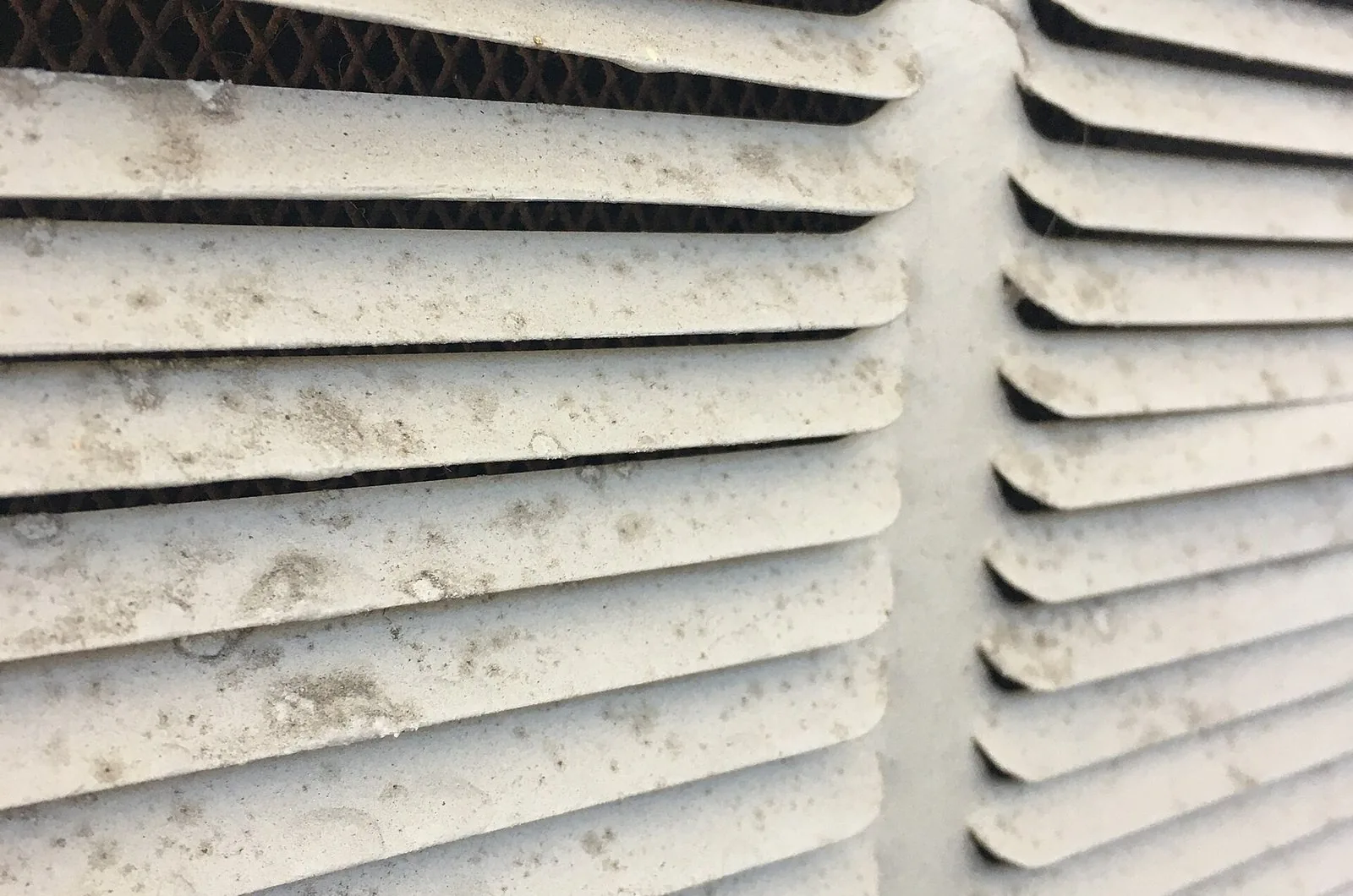
When a unit starts to underperform, the options in front of most households are limited to what's visible: wiping the outer casing, replacing the filter, or calling someone in. It helps to know what each of these actually reaches inside the unit, since the parts responsible for odour and reduced airflow — the heat exchanger fins, the fan wheel, the drain line — sit behind the casing, not on it.
Surface wiping vs. structured internal cleaning
| Surface wiping | Structured internal cleaning | |
|---|---|---|
| Heat exchanger fins | Not reached | Cleaned directly |
| Fan wheel | Not reached | High-pressure rinsed |
| Drain line | Not checked | Cleared where accessible |
| Time required | A few minutes | 60–180 minutes depending on unit |
What sets a structured process apart
Disassembly instead of access panels only
The front panel, filters, and where relevant the fan housing are removed, rather than cleaned around.
Matched materials per surface
Painted casings and stainless kitchen surfaces are treated with different degreasing materials, rather than one general product.
Drain path attention
Drain trays and pumps are checked and cleared, addressing a common source of recurring odour.
A record you keep
Photographs or a written note give you something to compare against at the next interval.
Effectiveness, in plain terms
Airflow and odour both trace largely to buildup on the heat exchanger fins and fan wheel. Cleaning that reaches those parts tends to restore airflow closer to the unit's original rating; cleaning that stops at the filter and casing generally does not, since the filter was never the main obstruction.
Filter-only cleaning
Addresses the most visible dust, leaves fin and fan buildup untouched.
Full internal cleaning
Addresses fin, fan, and drain — the parts most linked to airflow and odour.
Cost against replacement
Replacing a wall-mounted unit runs well into six figures in yen once installation is included. A cleaning visit sits far below that figure and, where the underlying equipment is otherwise sound, restores much of the airflow a worn unit has lost — without the disruption of removal and reinstallation.
What a visit looks like from your side
You confirm access to the unit and roughly when it suits you. We arrive, protect the surrounding surfaces, work through the unit, and leave a record before we go. There is no follow-up call unless you ask for one.
Results that hold over time
Buildup returns gradually rather than suddenly. Units cleaned to this depth generally take longer to reach the odour or airflow point that prompted the original visit, though the interval depends on use, filter habits, and the space itself.
A few common misunderstandings
"A working unit doesn't need cleaning."
A unit can still run and cool while carrying significant internal buildup — it simply works harder to do so.
"Any spray cleaner reaches the same parts."
Aerosol sprays generally reach the visible fin surface, not the fan wheel or drain line behind it.
"Replacement is always simpler."
Simpler in one sense, but it discards equipment that may only need its internals addressed.
In short
If the concern is odour, reduced airflow, or a unit that has simply not been opened in some years, a structured internal clean reaches the parts a surface wipe cannot, at a fraction of what replacement costs. The condition scale on the home page can help you judge whether that applies to your equipment.
Have a question about your own unit?
Send a short description through the contact form and we'll respond directly.